Iran war impact on global oil markets

The Iran war is reshaping global oil markets, disrupting supply chains, and increasing geopolitical risk across energy systems. This page provides ongoing analysis of how the conflict affects oil and gas prices and supply, the LNG market, and critical chokepoints like the Strait of Hormuz.

The Iran war is having a significant impact on global oil markets, increasing volatility and raising concerns about energy supply disruptions. Oil and gas industry professionals, along with analysts, governments, academics, and others, are closely watching how the conflict is impacting crude prices, production, and international trade flows.

The oil supply disruption from the closure of the Strait of Hormuz, which carries a significant share of the world’s crude exports, remains a key concern for global energy markets and traders.

This page brings together ongoing coverage and analysis from two EndeavorB2B brands, Oil & Gas Journal and Offshore, to help readers understand how the Iran war affects oil prices, LNG flows, and the broader energy market outlook. It includes the latest news, expert insights, and data-driven forecasts. 

Last updated Apr. 17, 2026

Some of the articles below require a free site‑access membership to view in full. If you are not already registered with Oil & Gas Journal, sign up here for free. For Offshore articles, sign up here for free

New content will be added as it becomes available. 

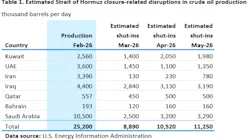
Production poll

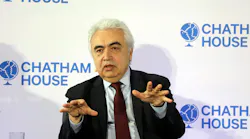
Fatih Birol, executive director of the International Energy Agency, told Bloomberg Apr. 16 that it could take up to 2 years to replace a meaningful share of oil and gas production disrupted by the Iran war, citing damage to more than 80 key energy assets in the region.


Expert voices: Iran war and energy markets

The Oil & Gas Journal ReEnterprised podcast examines the economic and operational consequences of the Iran war, drawing on expert analysis from industry researchers, geopolitical analysts, and energy market specialists.


In this episode of the Oil & Gas Journal ReEnterprised podcast, Conglin Xu, managing editor, economics, takes a look into the LNG market shock caused by the effective closure of the Strait of Hormuz and the sudden loss of Qatari LNG supply as the Iran war continues. 

Xu speaks with Edward O’Toole, director of global gas analysis, RBAC Inc., to examine how these disruptions are intensifying global supply constraints at a time when European inventories were already under pressure following a colder-than-average winter and weaker storage levels.

In this bonus episode of the Oil & Gas Journal ReEnterprised podcast, Head of Content Chris Smith is joined by Jim Krane, the Diana Tamari Sabbagh Fellow in Middle East Energy Studies and Center for Energy Studies Lead for Energy and Geopolitics in the Middle East at Rice University’s Baker Institute for Public Policy.

The two discuss the regional political forces shaping the Iran war so far, exactly how vulnerable the Strait of Hormuz is, and—shifting inland—what’s in it for the Kurds.


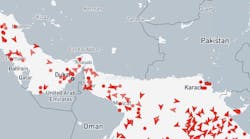
Infographic: Strait of Hormuz energy flows

The Strait of Hormuz is the waterway through which about 20 million b/d of crude and petroleum products flow. Click to enlarge. 

infographicteaser
An OGJ-created infographic details 2025 energy trade through the Strait of Hormuz.
March 11, 2026


Oil prices and market disruptions

The Iran war has triggered significant volatility across global crude benchmarks, with Brent prices surpassing $100/bbl and the IEA characterizing the disruption as the largest supply shock in history. Market uncertainty has been compounded by Strait of Hormuz transit risks, emergency strategic petroleum reserve releases, and shifting OPEC+ production decisions. Price movements have been sharp and reactive, responding to ceasefire signals, escalation news, and US policy interventions. The articles below track these developments as as they continue to unfold.
443657942 © Sergey Tolmachyov | Dreamstime.com
Red chart with down arrows with Iran flag image in background
Geopolitical tensions in the Middle East showed signs of easing as the Strait of Hormuz is reopened to commercial vessels.
April 17, 2026
46993159 © Prakobphoto | Dreamstime.com
Refining operations at night
Naphtha, LPG, and ethane have suffered the clearest demand destruction of any petroleum products as a result of the war in the Middle East, according to the International Energy...
April 15, 2026
368153131 © LaTerase | Dreamstime.com
Map of Strait of Hormuz and surrounding area under magnifying glass
Extensive damage from the Iran war, estimated at over $25 billion, underscores the current dependence on the Strait of Hormuz and the need for alternate transport solutions.
April 15, 2026
335760476 © Daniil Peshkov | Dreamstime.com
pumpjacks with global map and charts representing oil markets
Global oil markets have been severely disrupted by the ongoing Middle East conflict, with supply losses, surging prices, and weakening demand reshaping the 2026 outlook, the Internation...
April 14, 2026
245225002 © Rimidolove | Dreamstime.com
chart trending downward
Crude oil prices plunged sharply on Apr. 7 after US Pres. Trump announced a conditional 2-week ceasefire agreement with Iran, contingent on reopening the strait and restoring ...
April 8, 2026
209679774 © Evgenii Mitroshin | Dreamstime.com
Barrels of oil on top of world map and red arrow on graph increasing. Rising oil price concept.
The agency estimates that Brent crude averaged $103/bbl in March and will climb to a quarterly peak of about $115/bbl in second-quarter 2026, reflecting a sharp tightening in ...
April 7, 2026
244893701 © Dmitrii Melnikov | Dreamstime.com
oil pumping infrastructure shadow in front of Iran flag
Oil markets jumped again Thursday after Pres. Trump said US operations against Iran would continue well into April, renewing fears of a prolonged Strait of Hormuz disruption. ...
April 2, 2026
88152339 © Titoonz | Dreamstime.com
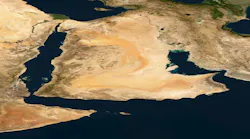
Detailed satellite view of Earth landforms focused on Asia
Asia is facing a dual energy crisis marked by both soaring prices and physical supply disruptions as escalating war in the Middle East constrains flows through the Strait of Hormuz...
March 31, 2026
356624652 © Mantas Zilicius | Dreamstime.com
illustration of oil pump jack on lighted chart representing oil markets
Despite high oil prices around $90–100/bbl, US producers are unlikely to significantly boost output due to industry constraints and continued capital discipline.
March 24, 2026
86811972 © Tobias Arhelger | Dreamstime.com
European flag on bright blue sly background
Europe's push for renewable energy faces hurdles that intensified after Russian gas cuts. The Iran war added a new layer of uncertainty.
March 23, 2026
113721998 © Bluebay2014 | Dreamstime.com
Increasing oil price, growing arrow graph
Oil market dynamics continue to validate a long-standing rule: supply disruptions or relief anywhere affect prices everywhere. Mark Finley of the Baker Institute argues that while...
March 23, 2026
CERAWeek by S&P Global
Middle East tensions are an underlying focus at the Houston conference this year, where executives are highlighting impacts of the tensions on oil markets and strategies.
March 23, 2026
172819603 © Charles Montgomery | Dreamstime.com
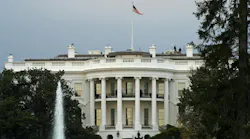
View of the US White House with water fountain and trees in foreground
The US eased sanctions on Iranian crude until Apr. 19, allowing limited oil sales to address rising energy prices.
March 23, 2026
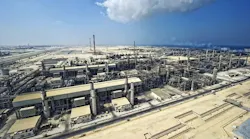
File photo from QatarEnergy
Qatar’s Ras Laffan Industrial City
The attacks have cast uncertainty over Qatar’s North Field East expansion, potentially delaying additional capacity and exacerbating global LNG shortages, with Asian and European...
March 19, 2026
69759725 © Micha Klootwijk | Dreamstime.com
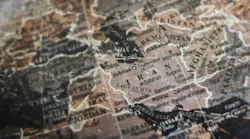
Iran map on vintage crack paper background
Attacks on Iran’s key energy assets, including the South Pars gas field, have heightened fears of prolonged conflict, impacting regional security, energy trade routes, and global...
March 19, 2026
72248889 © Amylaughinghouse | Dreamstime.com
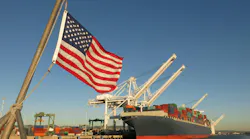
An American flag waves at a US port, where a cargo ship is docked beneath a crane on a blue sky day.
The temporary suspension allows more international tankers to transport oil and gas to US ports, addressing logistical bottlenecks, but faces limitations due to refinery compatibility...
March 19, 2026
Photo from Venture Global
Plaquemines LNG plant during construction
Energy Secretary Wright authorized a 13% increase in LNG exports from the Plaquemines plant to counter rising global natural gas prices from the escalating Iran war.
March 16, 2026
Strait of Hormuz tankers
Traders now have to worry about events over the weekend that could further increase prices while the market is closed.
March 13, 2026
178517564 © Harshit Srivastava | Dreamstime.com
Russian oil tanker at dockyard with tugboat
Amid geopolitical tensions in the Middle East and oil supply disruptions, the US has implemented temporary sanctions waivers, strategic petroleum releases, and is considering ...
March 13, 2026
185902451 © Nsbeer | Dreamstime.com
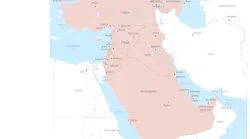
Middle East map with Iran top center
Participants in a roundtable discussion emphasized that while existing oil and gas dynamics remain, flexibility is decreasing, and resilience increasingly hinges on supply‑chain...
March 12, 2026
371543197 © Phichitpon Intamoon | Dreamstime.com
oil and gas infrastructure with US flag and sunset background
In response to increased oil prices driven by the Iran war and market instability, the Trump administration said it will draw from the Strategic Petroleum Reserve.
March 12, 2026
220149459 © Daniil Peshkov | Dreamstime.com
Oil industry and index concept with oil pump jack silhouettes at sunset field background and virtual financial chart
Emergency oil stock releases and alternative supplies are mitigating some impacts of supply disruption from the Iran war, but prolonged conflict could deepen shortages and price...
March 12, 2026
434928541 © Beniamino Forestiere | Dreamstime.com
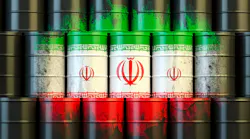
Stacked oil barrels painted with the colors and emblem of the Iranian flag
Amid fears of prolonged Gulf export disruptions, the IEA's 400 million bbl release underscores the severity of current global oil supply challenges and the importance of strategic...
March 11, 2026
361613260 © Daniil Peshkov | Dreamstime.com
Oil pump jacks at sunset with financial stock market graphs overlay
While recent comments from Pres. Trump eased immediate concerns about supply disruptions, analysts warn that geopolitical risks in the Middle East remain high, and oil price volatility...
March 10, 2026
214862166 © Tatiana Golmer | Dreamstime.com
Iranian flag over barrels of oil, metal coins, oil futures trading concept
Oil prices have exceeded $100/bbl as the Iran war escalates further. A few weeks' closure of the Strait of Hormuz could push crude over $150/bbl, analysts say.
March 9, 2026
26184925 © Robert Hale | Dreamstime.com
Middle East map with Iran centered
When the market opened after the initial strike on Iran, oil prices traded $75/bbl on the Open, a $7/bbl jump from Friday’s High, indicating a higher risk premium as the market...
March 6, 2026
96633437 © Titoonz | Dreamstime.com
Satellite view of Middle East landforms. Elements furnished by NASA
Broader infrastructure risks are emerging as regional attacks threaten production in Qatar, Saudi Arabia, and Iraq, while Europe and Asia face heightened vulnerability due to ...
March 3, 2026
387409148 © Clare Jackson | Dreamstime.com
Aerial view crude oil tanker Strait Of Hormuz
Despite initial market volatility, oil storage levels and pre-positioned supplies have mitigated immediate price shocks. However, ongoing tensions and insurance issues continue...
March 2, 2026
220736519 © Pavel Muravev | Dreamstime.com
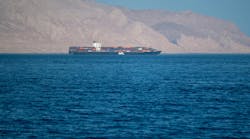
Sea container ship in the Strait of Hormuz, near Iranian coastline, 2021
About 20 million b/d of crude oil and petroleum products transit the Strait of Hormuz, linking Persian Gulf producers—including Saudi Arabia, Iraq, Iran, the United Arab Emirates...
March 2, 2026
350487557 © Dmitriiavramchik | Dreamstime.com
oil barrels with line graph overlay, representing international oil market
The oil production adjustments come at a time of heightened geopolitical uncertainty, with tensions in the Middle East threatening to disrupt oil shipments through key routes ...
March 2, 2026
244893701 © Dmitrii Melnikov | Dreamstime.com
Iran flag oil pump shadow
The conflict has caused a surge in Brent and WTI crude prices, with partial normalization after US government intervention. Shipping and refining markets face significant disruptions...
March 4, 2026
260459579 © Tomasragina | Dreamstime.com
260129260459579__tomasragina_dreamstime
US-Iran talks are scheduled to continue next week with no real progress achieved this week. Trump’s proposed deadline for a settlement agreement expires next week.
Feb. 27, 2026


Upstream, midstream, and downstream operational impacts

The Iran war has forced material operational changes across the region's upstream and midstream sectors. ExxonMobil has flagged a 6% drop in global oil-equivalent production in first-quarter 2026, with Chevron reporting a similar decline tied to Middle East asset disruptions. Saudi Aramco's Jubail refinery temporarily halted processing following conflict-related damage, while the Dallas Fed survey of energy executives found that capital planning has largely been put on hold. On the supply side, the Trump administration ordered the restart of California offshore oil transport to support military operations, reflecting the conflict's reach into US domestic energy policy. The articles below, from Oil & Gas Journal, document these operational developments as they've emerged.
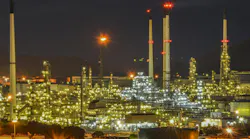

Photo from Saudi Aramco Total Refinery & Petrochemicals Co.

SATORP refinery in Saudi Arabia
Saudi Aramco's joint venture refinery in Jubail has temporarily closed units following damage caused by recent incidents amid ongoing Middle East conflicts.
April 10, 2026
160794961 © Andreistanescu | Dreamstime.com
Chevron logo on sign with bushes in background
Like ExxonMobil, Chevron is anticipating a decline in oil-equivalent production tied to conflict in the Middle East.
April 9, 2026
159251950 © Jetcityimage | Dreamstime.com
ExxonMobil logo
ExxonMobil anticipates a 6% drop in global oil-equivalent production in first-quarter 2026 due to disruptions in Middle East assets caused by the Iran war.
April 8, 2026
Occidental Petroleum Corp.
oxy_well_4
“Planning has been put on hold for the next 2-3 months,” one executive told researchers.
March 25, 2026
316349189 © Ruletkka | Dreamstime.com
California flag and outline map of California on paper texture background
Sable Offshore resumed Santa Ynez operations following a federal directive that cited national security needs despite California's legal challenges and opposition.
March 16, 2026
Venture Global Inc.
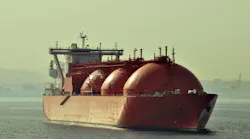
LNG vessel
Following QatarEnergy’s news that it has halted LNG production following the strikes on Iran, Venture Global’s CEO said his team is likely the top player today when it comes to...
March 2, 2026
Photo from Ratio Energies
Leviathan platform offshore Israel
Energean and Chevron have been instructed to suspend activities offshore Israel due to escalating regional conflicts and security concerns.
March 3, 2026


Iran war impact on offshore oil, gas operations

Offshore oil and gas operations in the Middle East face elevated risk as tensions involving Iran increase. Production platforms, subsea infrastructure, and offshore support systems may be affected by military activity, sanctions, or restricted access to key shipping routes. Operators are monitoring potential impacts on offshore production, drilling schedules, and logistics networks.

While offshore assets are generally more insulated than onshore infrastructure, their reliance on secure transport and regional stability introduces operational risk during sustained escalation. The articles below examine how the Iran war is influencing offshore oil and gas operations and project activity.
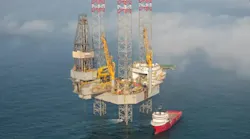
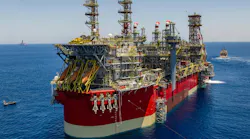
Photo from Borr Drilling
borr
One rig is now operating again offshore Saudi Arabia, with others preparing to re-start contracts in the UAE and Qatar.
April 15, 2026
Photo from Energean
offshore_energean
The company is incurring standby costs of ~$10 million/month, and Katlan's first gas is at risk if the halt extends beyond May.
April 6, 2026
NewMed Energy
Chevron Mediterranean received a notification from the Petroleum Commissioner at the Ministry of Energy and Infrastructure for the resumption of operations of the Leviathan platform
The resumption of operations was authorized by the Ministry of Energy despite the ongoing hostilities in the region.
April 3, 2026
Energean
Energean Power FPSO
Construction activity has progressed for the multi-field tieback to the Karish gas FPSO, where operations were recently suspended at the request of Israel’s government.
March 31, 2026
Courtesy Arab Drilling
offshore
Arabian Drilling, ADES and Borr Drilling have taken precautionary measures in GCC waters amid regional conflict.
March 30, 2026
157008299 | Background © Ruletkka | Dreamstime.com
Iran flag
Qatar LNG and Iran’s South Pars are among the worst affected, according to Rystad Energy analysis.
March 26, 2026
matejmo/2208992548/iStock/Getty Images Plus
offshoreiran
Tehran threatens to respond in kind; Brent crude prices shoot up 5% to above $108/bbl.
March 19, 2026
ronib1979/1253637422/iStock/Getty Images Plus
Iranian ships having impact on Persian Gulf E&P
Several Gulf states are curtailing offshore production for safety reasons, but also loss of export channels.
March 13, 2026
Courtesy marinetraffic.com
Borr Arabia III drilling rig
Earlier, the company downmanned three rigs operating in UAE, Qatari waters.
March 10, 2026
Ludovico82/1352091507/iStock/Getty Images Plus
offshore platform
Analysts say that the North Field Expansion (NFE) startup could slip into 2027 if regional tensions persist.
March 5, 2026
Photo from New Med Energy
Leviathan platform
Production halt will temporarily impact supplies to Israel’s grid and to neighboring countries.
March 5, 2026

Offshore investment, project timing, operator strategy

Offshore operators are adjusting investment decisions and project timelines in response to heightened geopolitical risk involving Iran. Exploration programs, final investment decisions, and development schedules may be delayed or reprioritized as companies reassess exposure to regional instability.

Capital allocation across offshore portfolios is also being influenced by shifting market conditions, including price volatility and supply uncertainty. 

While long-cycle offshore developments are less sensitive to short-term disruption, sustained tension can reshape investment strategy, slow project sanctioning, and alter the pace of offshore growth.
ID 59320551 © Dbajurin | Dreamstime.com
Iran flag blowing in wind
The escalation of US and Israeli military actions in Iran is prompting the offshore energy sector to reassess operational risks, supply chain disruptions and market volatility...
March 7, 2026
179970132 © Eugenesergeev | Dreamstime.com
id_179970132__eugenesergeev_dreamstime
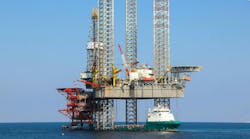
Escalating conflicts involving Iran, Israel and the US have heightened risks for offshore drilling in the Middle East, disrupting logistics, increasing costs and delaying projects...
March 5, 2026

Special Report

94513725 © Thomas Carpenter | Dreamstime.com
offshore_middleeast
From the archive: The Middle East offshore sector is undergoing a dynamic transformation, driven by innovation, strategic reinvestment and evolving market demands.
March 10, 2026